
Leadership
Employee Value-The Humanistic Shift
Employee Value: Do Your People Experience What You Promise?
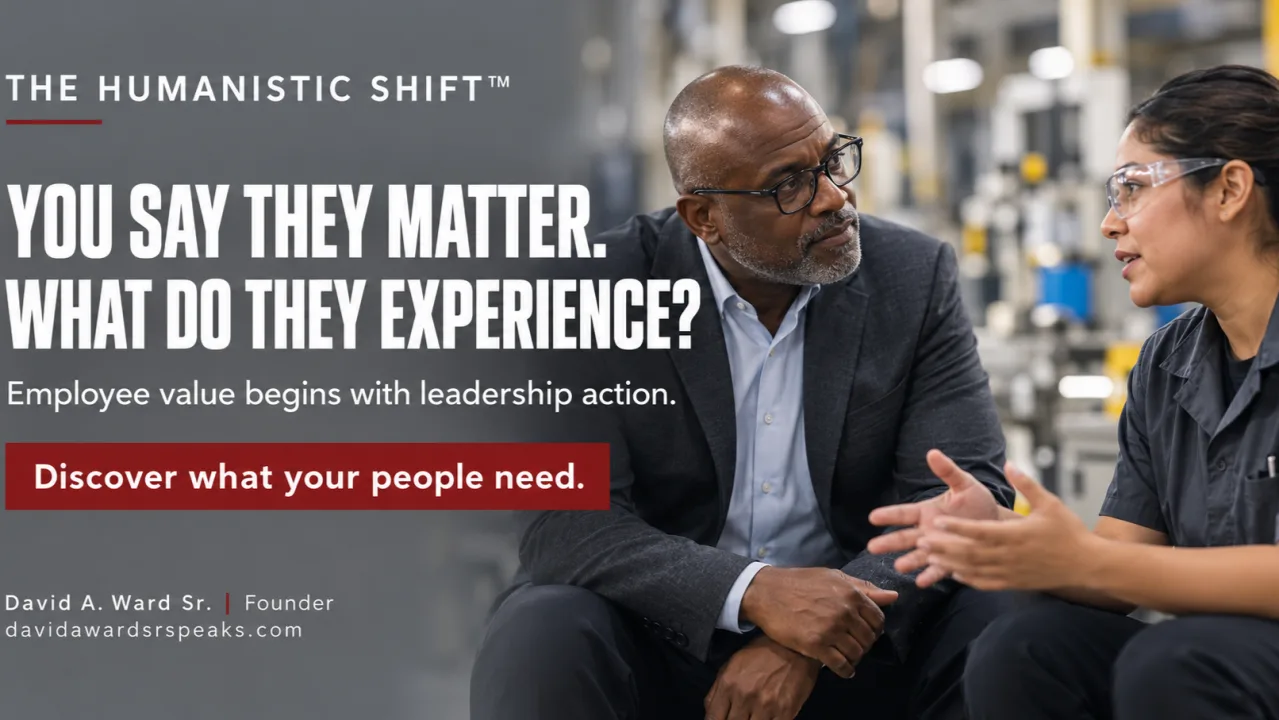
As an executive, have you taken the time to tell your employees how much you value them? Have you invested in their success? When was the last time you had a personal conversation with an employee one that gave them room to share their goals, struggles, and the people who depend on them?
You may know what an employee produces. What do you know about the person producing it?
Someone on your team may be caring for an aging parent. Someone may be working toward a qualification that could change their future. Someone may have an idea that would improve your operation but has never been asked.
Some employees arrive carrying pressures you may never see: caregiving responsibilities, financial worries, or concerns about their future. You don't need to know every private detail to show you care. You do need to make time, listen respectfully, and provide meaningful support.
When executives tell me they do not have time to engage with employees, I ask:
“If your employees drive your business’s success, what does it cost you to remain disconnected from them?”
Remember one thing: your employees don't care what you know until they know that you care about them by what you say, do, and act.
Then comes the question that matters most: What will you do with what you learn?
Value becomes real through your decisions
An employee hears “You matter” differently when their supervisor makes time to train them properly, encourages their development, and cares about their well-being.
They believe it when a concern receives a thoughtful response, a hazard receives prompt action, and leaders provide the time, staffing, equipment, and funding to meet clear expectations safely.
Employees also notice when praise is followed by unrealistic deadlines, requests for help go unanswered, or production pressure makes safety negotiable.
Respect grows when leaders listen. Trust grows when commitments are kept. Appreciation becomes credible when employees see investment in their development, well-being, and safety.
Your words create an expectation. Your actions teach employees whether to believe you.
That investment can include training for a new position, preparation for greater responsibility, or a meaningful role in improving the workplace. It also means recognizing the knowledge employees already bring. The employee doing the work may see a problem and a possible solution that never makes it into an executive report.
Have you given that person a reason to speak? Have you shown that their input will be considered and followed through on?
Every decision reaches beyond your company
Every employee walks through your doors with a life that continues after the shift ends. A child may be waiting for help with homework, a spouse counting on their support, or a parent expecting a call. Plans, responsibilities, and ordinary moments make a life meaningful.
When a workplace decision puts that person at risk, its consequences can reach everyone who loves them. Protecting an employee helps protect the future they are working to build.
That responsibility belongs at the executive table. One leader cannot credibly promise that people come first while another rewards decisions that place them at unnecessary risk. Executives must agree on what valuing employees requires: shared core values, clear expectations, consistent communication, and accountability that begins with themselves.
That commitment is at the heart of The Humanistic Shift™. Let me explain the benefits:
What it is
The Humanistic Shift™ helps executives align leadership so that valuing people becomes visible in everyday decisions.
It begins by examining the gap between executive assumptions and employee experiences. Leaders listen, establish shared expectations, and commit to action.
The opportunity is greater clarity, stronger trust, better use of employee knowledge, and investment that supports both people and lasting business success.
What it looks like
Transforming Leaders: Executives align on core values, speak with one voice, and hold themselves accountable, giving supervisors clear direction and reducing conflicting expectations.
Restoring Trust: Leaders address concerns, honor commitments, and act on employee input, building candid communication and dependable relationships with employees and business partners.
Elevating Culture: Leaders invest in employee growth and safety, even under pressure, making respect for people and their families’ futures visible in everyday decisions.
What it feels like
Imagine an organization where people know what is expected, trust the direction they receive, and feel confident their voices matter.
- Executives feel aligned: One direction, shared accountability, and honest information to make better decisions.
- Supervisors feel supported: Clear expectations and leadership backing to protect people and lead confidently.
- Employees feel valued: Their ideas influence decisions, their growth receives investment, and protecting their safety remains a nonnegotiable core value.
- Business partners feel confident: Consistent communication, mutual respect, and commitments kept.
- Families feel reassured: Their loved ones work for leaders committed to protecting their lives and futures.
The benefit: less uncertainty, stronger trust, and more energy devoted to solving problems, protecting people, and succeeding together.
Start with a conversation and make it matter
This week, ask an employee:
“What would help you succeed here?”
“What makes your job harder than it needs to be?”
“What is one thing you wish leadership understood?”
Listen without rushing to defend your organization. Follow up. Act where you can, and explain honestly where you need more time.
Give that person a reason to believe the conversation mattered.
If your employees were asked how your company demonstrates their value, what examples would they give?
Let’s begin with an Executive Alignment Conversation to explore that question, identify the gaps, and discuss practical steps toward an organization where people can say:
“I know I matter here because I see it in how we are led.”
David A. Ward, Sr. Founder, The Humanistic Shift™ Transforming Leaders. Restoring Trust. Elevating Culture.
Start With a 30-Minute Conversation
If this is the gap in your organization, let's talk for 30 minutes.