
Leadership
The Value of Alignment, Trust, and Protection
Your decision made at the executive table eventually reaches someone doing the work. It becomes an expectation a supervisor must explain. A deadline an employee must meet. A concern someone decides to raise or keep to themselves. The sound of silence is deafening; is anyone really listening?
Sometimes, it's the unimaginable consequences that affect a family for a lifetime.
That is why Alignment, Trust, and Protection belong at the center of leadership.
They provide your employees something tangible, something they can experience: clear direction, dependable leadership, and evidence that their lives and futures matter.
Alignment: Provides One Clear Direction
When executives interpret values differently, the workforce inherits the conflict. One leader says safety comes first. Another demands a deadline without addressing the conditions needed to meet it. A supervisor is left to reconcile the competing expectations, and employees must decide which message carries the most weight.
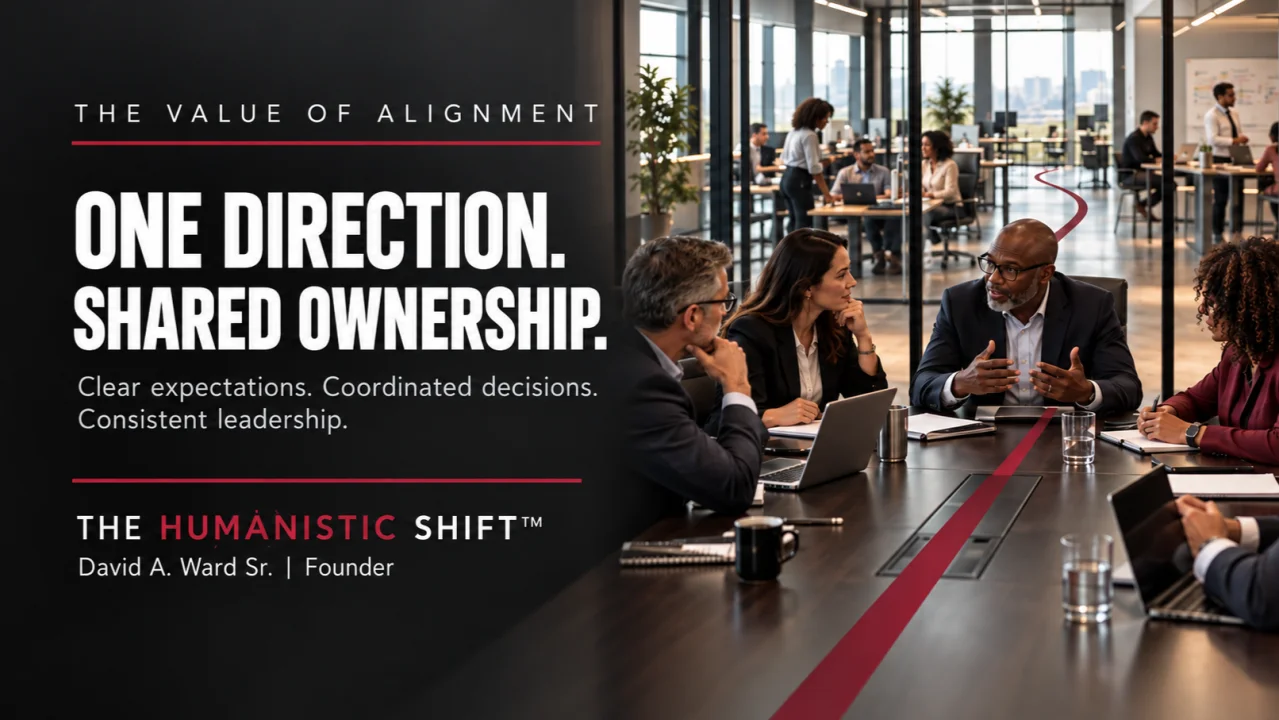
Alignment is the most vulnerable, powerful, and engaging exercise your executive team will encounter. This is where your executive members must be willing to remove titles, egos, power struggles, and apprehensions, and replace them with compromise, flexibility, and ownership to identify core values, what those values mean, clear expectations, accountability, and how decisions will be communicated. Learning to speak with one voice.
The real test comes when pressure arises to shift focus away from your core values, messaging, communications, responsibility, accountability, and expectations. The question then becomes:
Will your executive members uphold their commitments or fall to the unforeseen pressures relating to productivity, quality, safety, or profitability?
For your organization, alignment brings a clear vision of core values, less confusion, stronger engagement and collaboration, ownership at all levels, and a foundation for greater trust, value, and investment in your employees, business partnerships, productivity, and profitability
For your employees and business associates and partners, it means knowing what is clearly expected from leadership regarding support, resources, communications, value, trust, and commitment, standing firm and unwavering no matter the circumstance.
Trust: Give Your People a Reason to Believe You
Employees watch what happens after leadership makes a promise. When someone raises a concern, do they get a response? When a supervisor asks for help, does support follow? When leaders make a mistake, do they acknowledge it and take ownership?
Trust is built through everyday encounters. Listening begins the work. Following through gives listening credibility. Trust is earned and not given through title or position. Trust is earned when you do what you say you'll do and provide the encouragement, support, accountability, and feedback they need to do their jobs in an environment that promotes safety and security.
As leaders, ask your employees and business associates: How can we create a safer, more efficient, and more productive environment? What are the obstacles making your work and partnerships more difficult? Where do the expectations and messaging conflict in doing your job?. Do you believe leadership responds, follows up, and provides the necessary feedback on previous conversations, or has nothing changed?
Then explain what you heard, what will change, who owns the next step, and when you will follow up.
Your employees and business associates need to experience the humanistic value you say they have.
Protection: Make Your Values Visible
Protection shows up in staffing, training, equipment, maintenance, planning, and the authority to address unsafe conditions. It shows up when a supervisor has the resources to protect employees while meeting expectations. It shows up when an employee can raise a concern without fearing the response. It also requires leadership to recognize the employee beyond the position.
Every employee is building a life. They may have children depending on them, a partner sharing their future, or a parent relying on their care. The responsibility leadership is entrusted with reaches far beyond the workplace.
The Humanistic Shift™ Turns Commitment Into Reality
Alignment establishes shared direction. Trust gives people confidence in that direction. Protection makes the commitment visible in daily decisions. Through the Five-Phase Enterprise Transformation System, we listen deeply, identify gaps, develop a tailored roadmap, strengthen leadership practices, embed agreed values, and review progress.
The value is practical: less confusion, stronger coordination, clearer ownership, and a foundation for greater engagement, productivity, and trust.
Owners and executives, look across your leadership table:
Are your employees and business associates experiencing the core values you believe you are leading with?
The conversation will be uncomfortable, and the answers may bring even more uneasiness. You must be willing to listen, without questioning or becoming defensive. Take ownership, admit fault, and build a relationship based on trust and commitment to exceed expectations.
Today is the day to begin The Humanistic Shift™.
Schedule an executive alignment conversation at davidawardsrspeaks.com
The Humanistic Shift™: Transforming Leaders, Restoring Trust, Elevating Culture.
Start With a 30-Minute Conversation
If this is the gap in your organization, let's talk for 30 minutes.
Veteran-Owned and Operated