
Safety
Emergency Action Plans
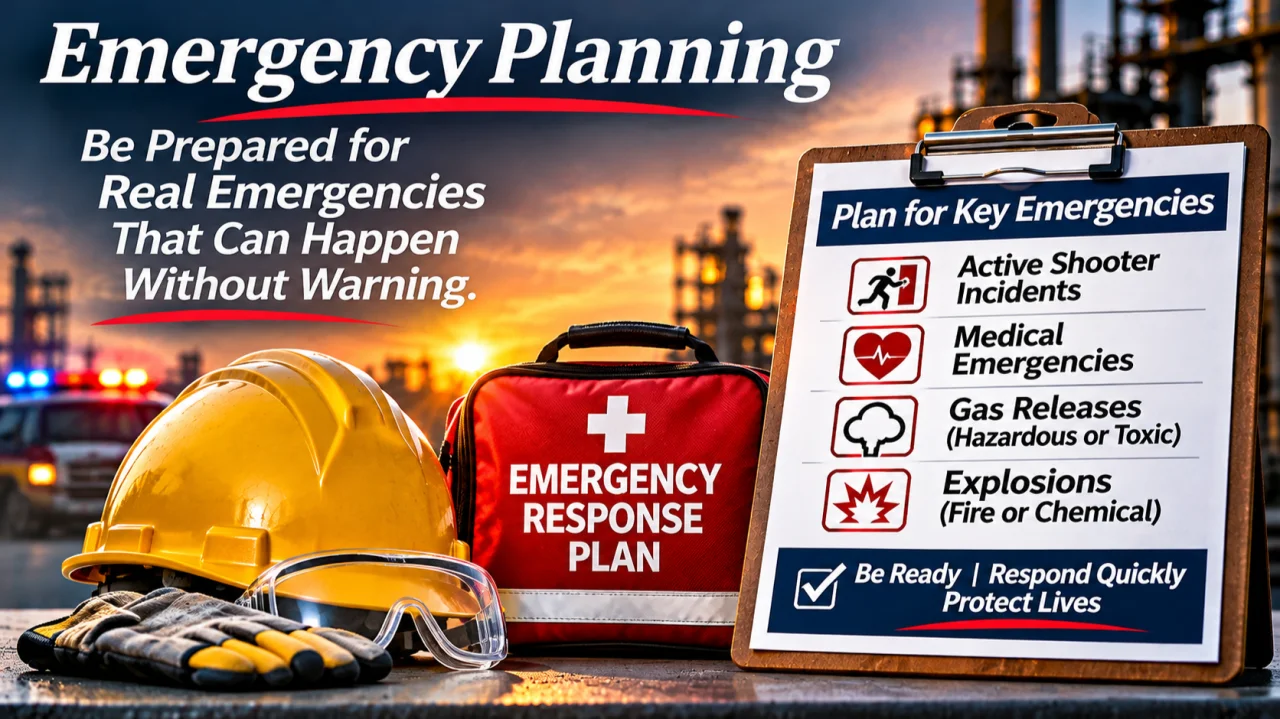
As an organization, are you actually prepared for emergencies, and are your employees actually trained, not just in fire drills or tornado drills? I'm talking about being prepared for potential incidents like:
- Active shooter
- Chemical Release
- Medical Emergencies
- Shelter In Place
- Flooding
- Inclement Weather
- Explosions
Have you considered the potential hazards other companies around your facility may pose to your organization, and have you discussed them so that, when an incident occurs, proper notifications will be made?
Every emergency requires specific equipment and a proper staging area, so it will be available when needed. What about utilities? Who will turn them off, and where is the necessary equipment to do so?
Who is responsible for calling 911 in case of an emergency? Do all employees have that authorization, or can only a few supervisors make that call? Remember, time is of the essence.
When was the last time you walked through your facility and determined what the worst medical issue could be? Then have you created medical go bags with the required medical equipment to manage the situation before medical help arrives?
Identify roles and responsibilities, and train on them. For example:
- PIO Public Information Officer
- IC Incident Commander
- ERT Emergency Response Team
- Executive Management Liaison
- Safety Administrator
- Facilities Manager
OSHA’s guidance emphasizes compliant exit route design (29 CFR 1910.36–37) and comprehensive Emergency Action Plans (29 CFR 1910.38), requiring clear evacuation procedures, marked exits, reporting methods, and employee training.
Overview
OSHA’s emergency exit and action plan requirements ensure workplaces are prepared for fires, chemical releases, severe weather, and other emergencies. These rules define how exit routes must be built and maintained, and what an Emergency Action Plan (EAP) must include.
Key OSHA Standards
1. Emergency Action Plans (29 CFR 1910.38)
Minimum required elements include:
- Procedures for reporting emergencies (who calls 911, who activates alarms).
- Evacuation procedures, including escape routes and assignments.
- Procedures for employees who remain behind to shut down critical operations.
- Accounting for all employees after evacuation.
- Rescue and medical duties assigned to specific employees.
- Contact names/job titles for plan information.
- Alarm systems and alert methods. These plans must be written unless the employer has 10 or fewer employees, in which case oral communication is allowed.
2. Exit Route Requirements (29 CFR 1910.36–37)
OSHA mandates:
- A minimum of at least two exit routes for most workplaces.
- Exit routes must be separated so one blocked route doesn’t trap occupants.
- Unobstructed exit paths, free of storage or combustible materials.
- Illuminated EXIT signs with specific size requirements (6-inch letters, 3/4-inch stroke).
- Directional signage when exits aren’t obvious.
Best Practices for Compliance
- Conduct regular workplace evaluations to identify hazards and ensure routes remain clear.
- Train employees on their roles and responsibilities during emergencies.
- Consider shelter-in-place procedures for chemical, biological, or radiological incidents.
- Review evacuation plans for high-rise buildings and employees with disabilities or language barriers.
- Maintain exit routes according to OSHA’s design, construction, and operational standards.
Summary
OSHA’s guide ensures workplaces have safe, clearly marked exit routes and robust emergency action plans that outline reporting, evacuation, communication, and employee responsibilities.
If you need help hosting an Emergency Planning workshop, visit my website at davidawardsrspeaks.com.
Start With a 30-Minute Conversation
If this is the gap in your organization, let's talk for 30 minutes.
Veteran-Owned and Operated