
Safety
Employee Trust: The Business Metric You Cannot Afford to Ignore
Every company needs to address this question: Without employee trust, how effective can you really be?
This starts with executives having the hard conversation about rebuilding trust. That conversation affects the business today and in the future.
We talk about productivity. We talk about safety. We talk about quality, retention, engagement, and profitability. But there is a question executives must be willing to ask before discussing any of them:
Do our employees trust us?
Not: Do we think they trust us?
Not: Did our employee survey produce an acceptable score?
But do the people doing the work genuinely trust leadership enough to believe what we say, raise concerns, challenge decisions, admit mistakes, and tell us what is actually happening?
That conversation starts at the executive table.
Trust Requires One Leadership Voice
Executives cannot expect employees to trust an organization when leadership sends conflicting messages. When Safety says one thing, Operations says another, Human Resources communicates something different, and frontline supervisors interpret all three, employees are left to decide what leadership actually means.
That is where confusion begins. That is where assumptions grow. And that is where trust starts to disappear.
Employees should not have to determine which executive's message carries the most weight. Leadership must first align around the organization's core values, expectations, and non-negotiables and then communicate them with one organizational voice.
This does not mean executives cannot disagree. They should. Healthy executive teams have difficult conversations behind closed doors. They challenge assumptions. They question decisions. They bring different perspectives to the table.
But once the decision is made, leadership must leave that room aligned. If executives are not aligned, supervisors will not be aligned. If supervisors are not aligned, employees will experience inconsistency. And inconsistency is one of the fastest ways to destroy trust.
Employees Are Watching What We Do
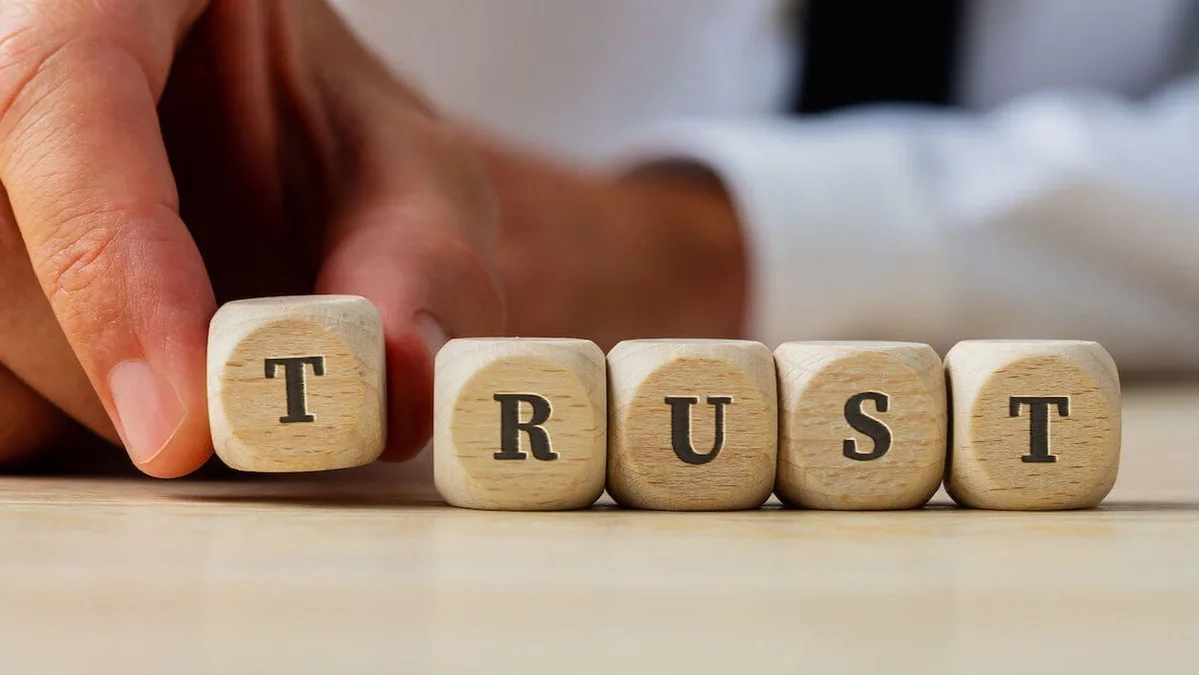
Trust is not created by putting the word TRUST on a company values poster. Employees determine whether they can trust leadership by watching what happens every day. They watch what happens when production is behind. They watch whether supervisors are held accountable. They watch whether the safety standard changes when an important customer order is at risk.
They watch what happens after someone raises a concern. They watch whether leadership follows through on its promises. And they especially watch the difference between what leadership says matters and what leadership actually allows.
That gap is where trust is won or lost. You can tell employees that safety comes first a thousand times. But if they watch production consistently override safety, they have received the real message.
You can tell employees their voices matter. But if speaking up gets ignored, labeled difficult, or treated differently, they have received the real message. You can tell people they are your greatest asset. But if decisions repeatedly communicate that numbers matter more than people, they have received the real message.
Trust Cannot Be Demanded
One mistake organizations make is expecting employees to trust leadership simply because leadership holds the title. A position gives you authority. It does not automatically give you trust. Trust must be earned through consistency.
It is built when leaders listen even when the message is uncomfortable. It grows when leaders admit, "We got this wrong." It strengthens when employees see that raising a legitimate concern results in action. It becomes part of the culture when employees no longer have to wonder whether leadership's values will change under pressure.
That is measurable trust: not simply whether employees say they trust leadership, but whether their behavior shows they believe it is safe to tell leadership the truth.
The Question Executives Must Be Willing to Ask
There is another question I believe every executive team should discuss:
What are our employees afraid to tell us?
That question may reveal more about your organization than another dashboard ever will. Because silence does not necessarily mean everything is fine. Sometimes silence means people have learned that speaking up changes nothing. Sometimes silence means employees no longer believe leadership wants to hear the truth. And in safety, silence can have consequences far beyond employee engagement.
I have witnessed what assumptions cost. It affects more than just the business. There are families destroyed, financially ruined, emotionally distraught, and all that is left are memories.
After more than four decades in safety, including federal OSHA investigations and national safety leadership, I have learned that serious events rarely begin on the day someone gets hurt. The warning signs are often there. Someone saw something. Someone knew something. A standard was not being followed. A supervisor looked the other way. A concern went unaddressed. An assumption went unchallenged. And sometimes the organization doesn't recognize the gap until an incident gives it a name, a family, and an empty chair.
Trust Is a Leadership Responsibility
Rebuilding trust is not an HR initiative. It is not a Safety initiative. It is not a communication campaign. It is an executive responsibility. It begins with leaders having the courage to examine the distance between leadership intent and employee reality.
That requires Alignment. Accountability. Trust. Humanity.
Align leadership around what truly matters. Hold people accountable when actions contradict stated values. Create an environment where employees can speak without fear. And never lose sight of the human being behind the employee number. Because trust should be manifested in every decision, every conversation, every message, and every action.
When employees trust leadership, they are more willing to speak. When they speak, leaders can see what they otherwise might miss. When leaders listen and act, trust grows. And when trust grows, organizations become stronger not only culturally, but operationally. So perhaps the next executive meeting should not begin with:
"How are our numbers?"
Perhaps it should begin with:
"Have we created an organization where our people trust us enough to tell us the truth?"
The answer to that question may determine far more about the future of your business than you realize.
Trust is not a soft leadership issue. It is the foundation on which safety, culture, performance, production, quality, and the organization's future are built.
David A. Ward, Sr.
The Humanistic Shift: Transforming Leaders. Restoring Trust. Elevating Culture.
Start With a 30-Minute Conversation
If this is the gap in your organization, let's talk for 30 minutes.