
Leadership / Safety
If Safety Is Priceless, What's Stopping You From Protecting Your People?
A safety investment gets questioned before it is approved. After a serious injury, the organization somehow finds the funds and resources to fix a longstanding problem.
Why are organizations more prepared to absorb the consequences than to fund prevention? Why be reactive when the cost is tremendously higher, creating potential injuries, fines, and delays?
If we say employees are our greatest asset, "family," their protection should be a core value and visible in our budgets, staffing, equipment, training, and executive decisions.
What does your organization’s investment demonstrate about the value it places on people?
The numbers should command the executive table’s attention
The National Safety Council estimates that work injuries cost the United States $181.4 billion in 2024, including:
- $54.9 billion in wage and productivity losses.
- $36.8 billion in medical expenses.
- $15.5 billion in employers’ uninsured costs.
These are estimated economic costs to society, rather than a bill paid exclusively by employers. They show how the consequences spread across businesses, workers, and others. Injury Facts
The U.S. Bureau of Labor Statistics recorded 5,070 fatal work injuries in 2024, with one worker dying from a work-related injury approximately every 104 minutes. 2024 A01 Results
Behind each death was a person with relationships, responsibilities, plans, and a future.
A company can replace a position. A family cannot replace that person.
The total cost of a workplace fatality ranges from 2.0 million to 20 million. Please read the link below:
https://www.safetysquareplatform.com/resources/guides/true-cost-workplace-fatality
Prevention Has Measurable Business Value
The cost of prevention deserves scrutiny. So does the cost of leaving people exposed to harm.
The National Safety Council’s latest published work-injury estimates, covering 2024, put the economic cost at:
| Measure | Estimated cost |
|---|---|
| Total U.S. work-injury costs | $181.4 billion |
| Wage and productivity losses | $54.9 billion |
| Medical expenses | $36.8 billion |
| Employers’ uninsured costs | $15.5 billion |
| Average cost per medically consulted work injury | $48,000 |
| Average economic cost per work-related death | $1.54 million |
These estimates describe economic losses across society, rather than what an individual employer necessarily pays. The per-death figure measures economic consequences; it does not represent the value of a human life. Injury Facts
For an insurance-based comparison, NSC reports an average workers’ compensation claim cost of $50,076 for accidents occurring in 2023–2024, using NCCI data valued as of October 15, 2026. Average amputation claims reached $149,543. These figures cover the policies and jurisdictions represented in that database. Injury Facts
Newer research also supports the value of prevention. A 2023 study of an OSHA inspection program found that each inspection prevented an average of 2.4 serious injuries over the following five years, a 9% reduction. That finding applies to a specific inspection program, not a guaranteed return from every safety investment. aeaweb.org
The financial consequences are measurable. A family’s loss reaches far beyond those calculations.
Before rejecting a safety investment, ask: What risk remains, who will carry it, and what would correcting it protect? So why does the investment get delayed?
No single explanation fits every organization. But leadership should examine whether these patterns exist within its own walls:
The expense is visible; the avoided tragedy is not. A machine guard, maintenance shutdown, or additional training has an immediate cost. An injury prevented may never appear in a report.
A quiet injury log becomes a reason to feel comfortable. Leaders need to ask what hazards remain, what concerns employees have stopped reporting, and what previous close calls revealed.
Responsibility normally sits with safety staff while resources sit elsewhere. A safety professional can identify a problem. Correcting it may require executives to approve spending, maintenance to stop equipment, and production leaders to adjust schedules.
Commitments weaken under pressure. Employees hear that safety matters. Then they discover what happens when working safely threatens a deadline. Actions speak louder than words; however, the words employees share speak even louder.
These are questions of executive alignment. Leaders must establish core values that govern decisions and provide the resources to uphold them. These core values must be unwavering, stable, a firm cornerstone of the organization, with no excuses.
Is your executive team aligned? If not, what is it costing you?
Is your investment Valuable?
When you invest, determine the value in effective hazard controls, reliable equipment, adequate staffing, and training people understand; consider what your investment supports:
- Employees: protection from harm and greater confidence that raising concerns leads to action.
- Supervisors: the resources, authority, and executive backing to meet expectations safely.
- The business: fewer injury-related disruptions and better conditions for reliable performance.
- Families: a loved one’s ability to remain present, earn a living, and pursue a future.
- Customers, partners, and communities: evidence that your organization takes its responsibilities seriously.
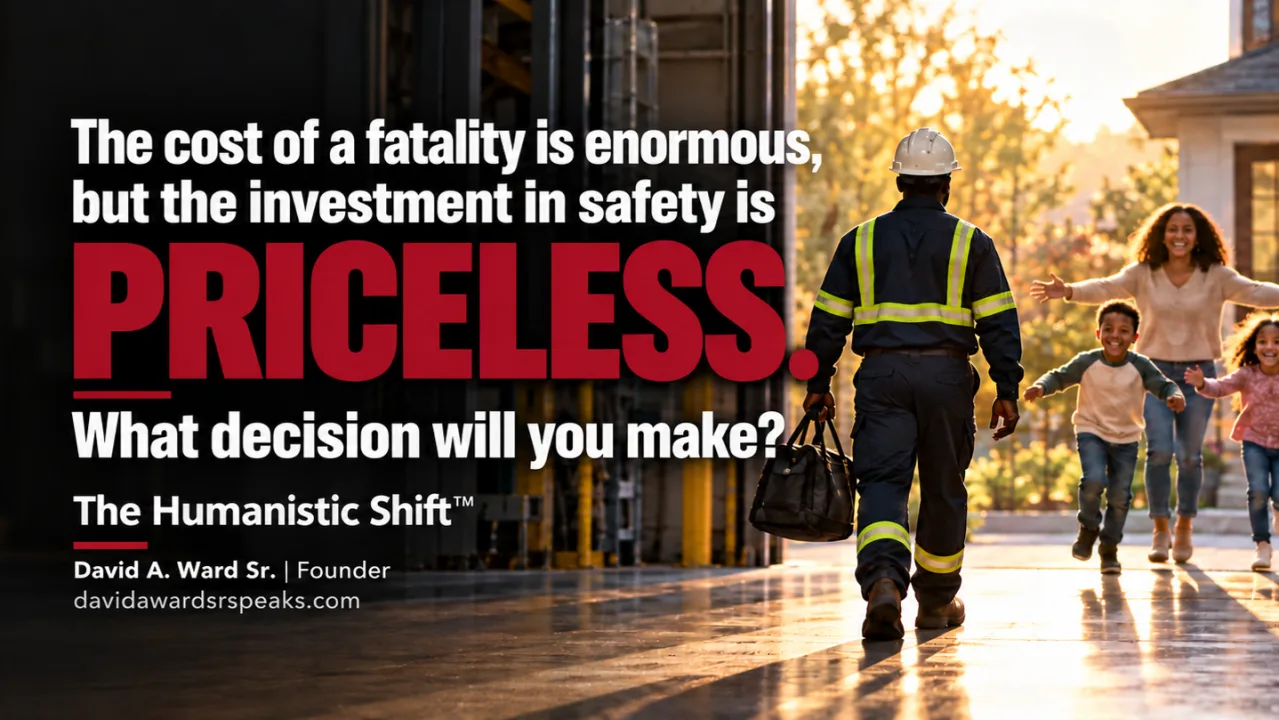
Yes, the ROI matters, but so does the employee who can still pick up a child, care for a parent, or enjoy the life they have worked to build. You can't put a price tag on an employee's life or their family's future.
Something to ponder: If you invest in your employees' safety, you're actually investing in their families' future. So, what do you think that employee is going to give to your company?
The most valuable returns on safety aren't monetary; they are the ordinary moments a family gets to cherish.
Before your next budget meeting, ask these questions
- Identify the hazards that require funding, ownership, or corrective action.
- Identify staffing, time, equipment, and authority needs to protect your people.
- Identify safety concerns that require funding and could delay production.
- Are executives holding themselves to the same expectations they set for everyone else?
- What will we fund and correct now, and how will it impact our values and the people we need to protect?
Executives need to do more than discuss the answers. Involve the people doing the work in verifying the improvements. Assign responsibility. Commit resources. Set completion dates.
Make the investment before a family pays the price
I created The Humanistic Shift™ to help leaders align their core values, messages, expectations, accountability, trust, and commitments with what employees actually experience. Through The Humanistic Side of Safety™, I challenge organizations to recognize the human lives behind every decision.
My conviction is unwavering: valuing employees is a moral obligation, a leadership responsibility, and an essential foundation for a safe, productive, profitable, and sustainable business.
A Message For Executives:
Your intentions don’t protect people. Your decisions do.
Bring this article to your next executive meeting, safety committee meeting, Union meeting, or executive roundtable, identify one unresolved risk, and commit to addressing it. Share it with a leader who has the authority to turn concern into action.
Ready to align your leadership and strengthen your investment in people?
David A. Ward, Sr. Founder of The Humanistic Shift™ and The Humanistic Side of Safety™ Transforming Leaders, Restoring Trust, Elevating Culture
Start With a 30-Minute Conversation
If this is the gap in your organization, let's talk for 30 minutes.
Veteran-Owned and Operated