
Leadership / Safety
The Cost of Waiting: Why Are Companies Still Failing to Invest in Employee Safety?
Unsafe working conditions cost companies money. They can also cost people their lives.
Every day, organizations make decisions about where to invest their resources. Equipment, technology, production, and growth all receive attention because leaders understand their value.
But what happens when an employee reports an unguarded machine, inadequate training, or a hazardous condition?
Is the concern addressed? Is the investment approved? Or is the decision delayed until an injury, inspection, or operational failure makes action unavoidable?
The question every executive team should ask is:
Why would we wait for someone to get injured or killed before investing in a safer way to work? Especially when we already know the hazard exists.
The cost reaches far beyond a citation
The National Safety Council estimates that work injuries cost the United States $181.4 billion in 2024. That estimate includes lost wages and productivity, medical expenses, and other costs. It represents an economic impact across society, not a bill paid entirely by employers. One fatality costs an organization $1.5 million dollars.
For an individual organization, a serious injury can bring medical and workers’ compensation costs, lost production time, equipment damage, investigations, training expenses, and disruption to customers and coworkers. A citation may be only one part of the financial impact.
Federal OSHA penalties can also be substantial. In 2026, maximum penalties are $16,550 per serious violation and $165,514 per willful or repeated violation. Actual penalties depend on the circumstances, and state plans may differ. Federal maximums did not increase from 2025 to 2026, so it would be inaccurate to suggest they rise every year.
No two situations carry the same costs. A safety investment is not guaranteed to cost less than a particular citation. But when leaders consider the potential consequences of a serious injury, not just the price of a corrective action, the value of prevention becomes much clearer.
And the greatest cost can never be captured on a spreadsheet. How can you actually quantify monetarily an employee who has been severely injured or killed at work?
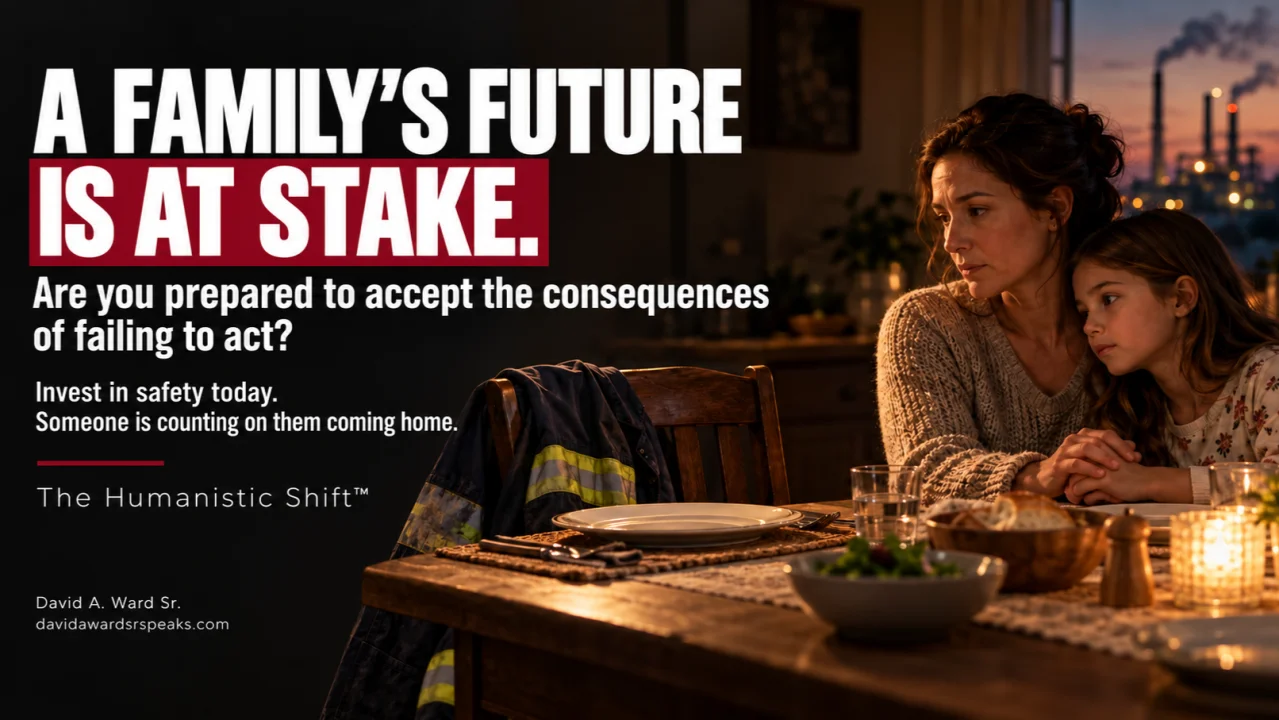
Behind every executive decision is a person
An employee is more than a job title, a production number, or a line on a payroll report.
That person may be a parent, spouse, grandparent, friend, or caregiver. Someone is waiting for them to come home. Someone depends on their presence, income, encouragement, and love.
When an employee is seriously injured or killed, the consequences follow that family long after the investigation is closed, and the organization moves forward without any further contact or concern. Coworkers carry the experience, too.
What value do we place on investing in protecting the life and future of the person doing the work that makes our organization successful?
Why do organizations wait?
In my experience, the reasons can vary. Leaders may believe existing policies provide enough protection. A hazard may become so familiar that people stop recognizing its seriousness. A supervisor may feel pressure to meet production goals while waiting for resources. Employees may have raised concerns, but their messages never reached someone willing or able to act.
Sometimes the decision comes down to a question asked at the wrong time:
“Can we afford to fix this?” You cannot afford not to fix it.
That question deserves a second one:
“Can our people and their families afford for us to wait?” If it were your family, how would you answer that question?
Making safety a core value matters. A written commitment to safety matters only if you stand by it, fund it, enforce it, and provide the necessary resources. Employees need to see that commitment in staffing decisions, equipment purchases, maintenance, training, which should be mandatory without any exception, and the response they receive when they speak up.
Prevention is a leadership decision
A proactive organization does more than respond to the last incident. Its leaders seek out the conditions that could cause the next one.
That starts with a conversation around the executive table:
- Are our leaders aligned on our core values?
- Are our leaders aligned in our expectations and accountability?
- Are our leaders aligned with our definitions?
- Do our employees, supervisors, and business partners understand our messages?
- Are our expectations realistic for our employees, supervisors, and business partners?
- Do supervisors have the authority, time, and resources to address hazards?
- Are employees comfortable reporting concerns, and do they see action and follow-up afterward?
- Do we assess hazards before introducing equipment, processes, or production changes?
- When safety and production demands compete, what do our decisions demonstrate?
Then leaders must act on what they learn: listen to employees, assess the work as it is performed, correct hazards, provide effective training, and follow through.
Your intentions don’t protect people. Your decisions do.
Why invest now?
The Humanistic Shift™ begins with a straightforward commitment:
W — Why: Every employee deserves to work in an environment where their life and future are valued.
I — Invest: Provide the leadership, training, equipment, staffing, and resources people need to perform their work safely.
N — Now: Act on known concerns today. A hazard does not become less dangerous because a decision has been postponed.
Prevention requires an investment. So does responding after something goes wrong. Prevention gives leaders the opportunity to protect people before a family’s future changes.
A challenge to every executive team
The next time a safety concern reaches your desk, look beyond the immediate cost of correcting it. Consider the person exposed to the hazard, the family waiting at home, the family's future, and the message your decision will send throughout your organization and community.
Then ask:
Why aren't we willing to invest to protect an employee’s life, a family's future and our business reputation?
If you are ready to align your leadership team around clear expectations, accountability, and a lasting commitment to your people, let’s start a conversation and build a partnership.
David A. Ward, Sr. Founder, The Humanistic Shift™
Transforming Leaders, Restoring Trust, Elevating Culture
Start With a 30-Minute Conversation
If this is the gap in your organization, let's talk for 30 minutes.
Veteran-Owned and Operated