
Leadership / Humanistic Shift
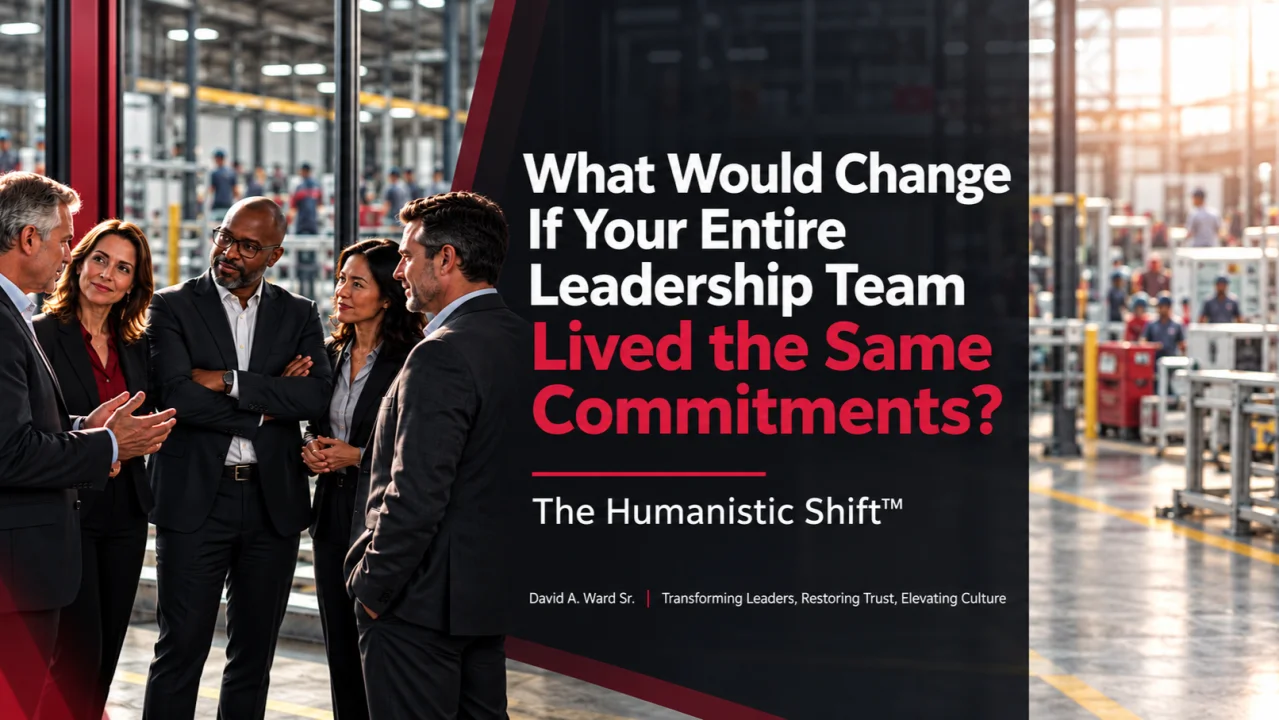
What Would Change If Your Entire Leadership Team Lived the Same Commitments?
Your organization’s culture is taking shape in the decisions your leaders make today. Are those decisions creating the organization you intended or conditions your people have learned to endure? It's a powerful question that many are not willing to answer.
For owners and executive leaders, the answer requires more than reviewing policies or agreeing that improvements are needed. It requires examining whether your leadership team shares the same core values, expectations, accountability, and messaging that consistently demonstrate what it asks others to believe.
If you want employees to trust your commitments, your executive team must first agree on what those commitments require.
That is the work of The Humanistic Shift™.
My ultimate goal is to help you create a sustainable culture where these commitments become part of everyday operations.
Core values guide every decision
Your core values must define your organization’s identity and govern how it operates, especially when deadlines tighten, staffing falls short, or protecting someone requires an investment.
Employees should recognize those values in safety, production, quality, scheduling, purchasing, maintenance, training, and how leaders value their people.
What decision would your executive team refuse to approve because it violates your core values?
If the answer changes depending on who is in the room, you need to address alignment.
Accountability begins at the executive table
Executives establish expectations, allocate resources, and influence what the organization accepts. They must also accept responsibility when their decisions create conflicting demands or leave people without the support to succeed.
Accountability means naming who owns a commitment, providing what is needed to fulfill it, and following through. It must apply throughout the organization.
No position or title exempts anyone from the expectations they ask others to uphold.
Communication gives people one clear direction
When executives send different messages, supervisors must interpret which instruction matters most. Employees then work within that uncertainty.
A unified leadership voice requires shared definitions, clear expectations, and agreement on how to resolve competing demands. Transparency also means explaining decisions, acknowledging what remains unresolved, and answering questions.
Can your employees act confidently on what one leader tells them without worrying that another leader will contradict it?
Trust grows through what people experience
Trust requires leaders to listen without immediately defending, admit when they have been wrong, and respond when someone raises a concern.
Vulnerability matters because leaders cannot address problems they are unwilling to hear. Integrity matters because a promise loses credibility when action never follows.
Rebuilding trust takes sustained effort: acknowledge the gap, explain what will change, act, and return to the people affected to check whether the change helped.
Your people need repeated reasons to believe that speaking up makes a difference.
Humanistic care becomes nonnegotiable
Every employee has a life beyond your workplace. Someone depends on their presence, their income, their care, or their encouragement.
Recognizing that humanity must influence how you lead. It means investing in protection, treating concerns with respect, supporting people through difficult circumstances, and considering whose future a decision may affect.
Compliance establishes requirements. Your commitment to people must remain strong wherever their safety, dignity, and well-being depend on your judgment.
These commitments must hold together
Clear values lose their authority when leaders make exceptions for themselves. Communication loses credibility when actions contradict it. Trust weakens when concerns receive acknowledgment but no response.
A sustainable culture requires your executive team to uphold these commitments together—and continue doing so under pressure.
Your intentions don’t protect people. Your decisions do.
Bring your executive team together
If you are an owner or executive seeking this kind of culture, schedule a meeting with me to discuss what it will take to build it.
Bring your leadership team. Bring the concerns that keep resurfacing. Be prepared to examine conflicting expectations, hear uncomfortable feedback, and accept ownership of what needs to change.
Together, we can discuss your current challenges, the commitments your leaders need to establish, and the actions required to make them visible throughout your organization.
What would become possible if your people could rely on the same values, expectations, and accountability from every leader?
Do not leave that question unanswered.
David A. Ward, Sr. Founder of The Humanistic Shift™ Transforming Leaders, Restoring Trust, Elevating Culture
Start With a 30-Minute Conversation
If this is the gap in your organization, let's talk for 30 minutes.
Veteran-Owned and Operated