
Leadership
The Humanistic Shift: What Changes When Companies Truly Value Their People?
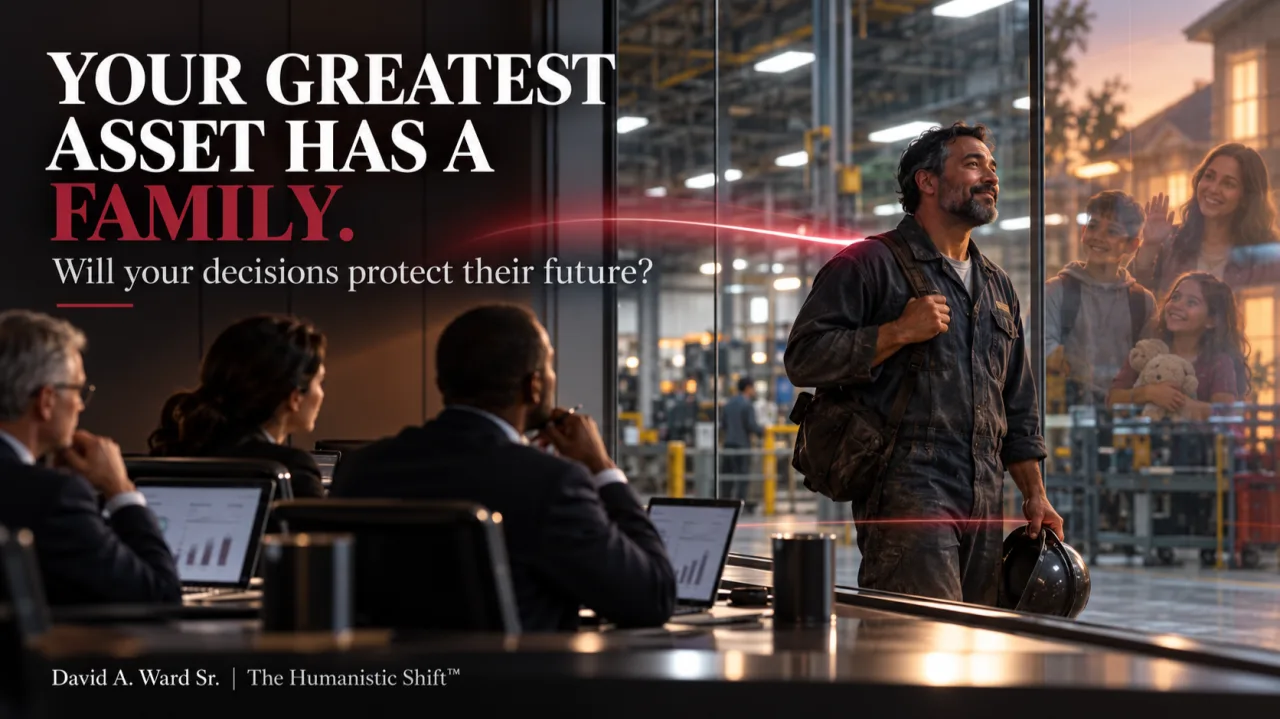
A company can call its employees its "greatest asset," a member of the "family." But what happens when protecting them requires an investment, a difficult conversation, or a decision that slows production?
That is when employees learn what those words mean.
You can't capture the true value of an employee on a balance sheet. Every person who walks through your doors brings experience, judgment, ideas, and the ability to strengthen your organization. They also have a future they are building, not only for themselves but for their loved ones who depend on them every day.
Yet many leaders make safety decisions without knowing what employees experience each day. A policy may be clear in the boardroom and difficult to follow on the floor. A supervisor may feel pressure to meet a target but lack the support to stop unsafe work. An employee may see a hazard and wonder whether speaking up will cost them their job, position or their future.
The Humanistic Shift™ begins when executives are willing to uncover that gap and take responsibility for closing it. It's not a simple process, but it is effective, efficient, and will change your organization's trajectory with commitment.
It means listening to employees before assuming a system works. It means giving supervisors clear expectations and the resources to meet them. It means treating an employee concern as a chance to protect someone, not as an inconvenience. And it means aligning the executive team around one commitment: protecting human life is a core value that does not change when the work gets difficult, when shareholders pressure the company, or when union officials push back.
Investing in employees’ safety is also investing in their futures and their families. When an employee goes home healthy, they can keep building a life, caring for family, and contributing their talents to the organization. When companies protect that possibility, they show people that their value extends beyond the work they produce.
Imagine the change across an industry if more executive teams asked: What are our employees experiencing that we have failed to see? Then imagine what could happen if we acted on the answer no matter how difficult it is to hear.
That conversation takes courage, commitment, and self-reflection. It will begin with stronger employee trust, clearer accountability, communication, respect, ownership, and a company employees believe in and value.
Before you ask employees to believe in your core values, show them what those core values protect every day.
I’m David A. Ward Sr., founder of The Humanistic Shift™. I partner with executive teams ready to examine the gaps between their intentions and their employees’ experience and build a partnership to provide a safer future for everyone.
If your team is ready for that conversation, let’s begin: https://scheduler.zoom.us/david-ward-sr/
Start With a 30-Minute Conversation
If this is the gap in your organization, let's talk for 30 minutes.