
Leadership / Safety
Workplace Bullying
Think about this.
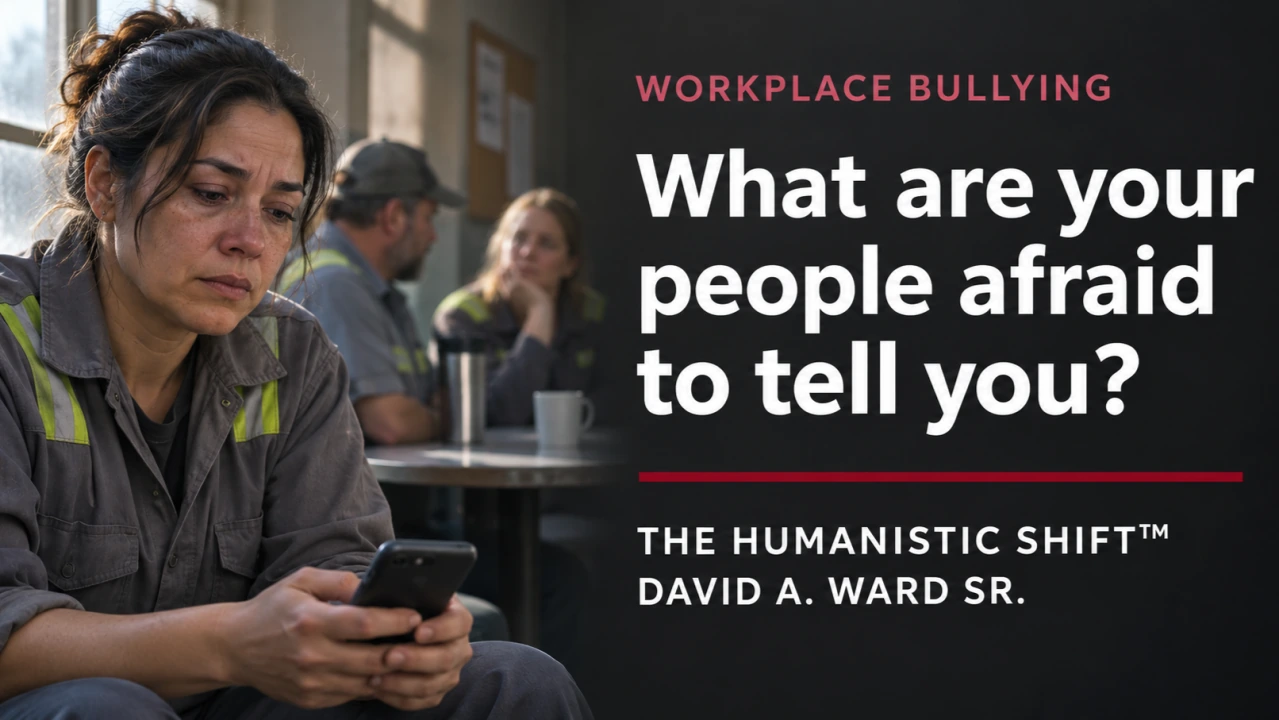
An employee opens the team chat before their shift. Someone has posted a screenshot to embarrass them. A few coworkers have reacted with laughing emojis. Their supervisor is in the chat, too.
Now imagine that employee has a safety concern later that morning. How confident are you that they’ll speak up in front of the same people?
Does workplace bullying exist in your organization? Before you answer, ask yourself who your employees would tell if it did, especially if the person doing it was their supervisor or your top performer.
What the numbers tell us
The Occupational Safety and Health Administration (OSHA) includes harassment, intimidation, and other threatening behavior in its description of workplace violence. The U.S. Bureau of Labor Statistics (BLS) estimated that private industry had 57,610 nonfatal workplace violence cases in 2021 and 2022 combined involving days away from work, job restriction, or transfer. These figures describe a broader workplace violence category. For a measure specific to bullying, the Workplace Bullying Institute’s 2024 U.S. survey found that 32.3% of adult Americans reported being directly bullied at work.
Please take a moment to read the link below; you'll be shocked at the information.
https://worldmetrics.org/workplace-bullying-statistics/
Think about what may never reach your desk. An employee starts eating lunch alone. Someone who used to ask questions stops contributing in meetings. A dependable worker starts looking for another job. Any of those changes can have several explanations. They’re reasons to check in privately and listen before you draw a conclusion. Research has linked workplace bullying with symptoms of anxiety, depression, and psychological distress.
Pay attention to who keeps becoming the target
A misunderstanding can sometimes be resolved with a direct conversation. Repeated humiliation, intimidation, or deliberate exclusion calls for intervention. Watch who gets mocked for how they speak, who keeps being left out of information they need to do their job, and whose concerns are brushed aside because the person responsible gets results.
The same behavior can follow someone home through group chats, email, texts, and social media. It can look like posting a humiliating comment in a team forum, circulating private information to embarrass a coworker, or impersonating someone online and spreading rumors. Ask yourself what it feels like to put your phone down at night knowing the same people will be waiting for you at work in the morning.
Give witnesses something they can do
One way to practice speaking up is to rehearse the Four Ds. Choose the response that fits the situation and feels safe.
- Direct. Interrupt the behavior calmly. “Let’s stop there. That comment was personal.”
- Distract. Break the momentum. “Can you help me with something for a minute?”
- Delegate. Get help from someone who can intervene. “I’m concerned about what’s happening. Can you step in?”
- Delay. Check in privately afterward. “I saw what happened. How are you doing? Would you like me to go with you if you decide to report it?”
If someone trusts you enough to tell you what happened, start with “I’m glad you told me. What do you need right now?” Listen without judgment. Ask what happened, explain what comes next, and follow up. The next conversation matters, especially if the employee is worried about losing hours, getting reassigned, or being treated differently for speaking up.
Executives and supervisors, put yourselves in that employee’s place
At your next leadership meeting, ask each person around the table to answer these questions in their own words.
- If my supervisor were bullying me, where could I go outside my chain of command?
- If the person responsible were our best performer, would we address the behavior with the same urgency?
- Who would check in with me afterward, and how would they know if the treatment got worse?
Then ask your employees where they would actually go. If their answer differs from yours, listen long enough to understand why.
We all have a part to play in stopping workplace bullying. Executives have the authority to set expectations and hold people accountable. Supervisors can intervene when they see it. Coworkers can help someone feel less alone. The person being targeted already has enough to carry. Who will stand beside them when speaking up costs something?
My challenge is this: when you see someone being intimidated, feeling alone, or verbally abused, stand up for them, give them value, and possibly save their life.
Your intentions don’t protect people. Your decisions do.
David A. Ward Sr. | The Humanistic Shift™ Transforming Leaders, Restoring Trust, Elevating Culture. davidawardsrspeaks.com
Start With a 30-Minute Conversation
If this is the gap in your organization, let's talk for 30 minutes.
Veteran-Owned and Operated